ADA Mobile Commode Needs Every Rental Planner Ought To Evaluation
If you have ever before been in charge of washroom preparation at an event, short-term worksite, public celebration, or seasonal procedure, you already know exactly how rapid portable cleanliness choices can come to be stressful. The pressure normally lands at one time. Headcount changes. The site shifts. A delivery truck needs a different entrance. Then somebody asks the question that ought to have been resolved a lot previously: do we have the appropriate easily accessible unit, in the appropriate place, set up the ideal way?
That concern matters much beyond logistics. An ada mobile toilet is not simply another line product on a rental order. It belongs to whether guests, employees, participants, and participants of the public can make use of the website with self-respect and freedom. When coordinators deal with access as a final add-on, they frequently wind up with a pricey scramble and an arrangement that still falls short.
The good news is that the core needs are not mystical. They do, nonetheless, should have mindful review. A certified order is about greater than requesting one bigger device. Positioning, route, entry conditions, identification, and the variety of accessible units in a cluster all matter. Those details are where rental strategies normally are successful or fail.
The need that gets missed out on most often
The point I see forgotten usually is straightforward: when portable single-user toilet devices are supplied in a collection, at least 5 percent of the systems because cluster have to be accessible. That common applies also at short-lived events.
That catches individuals unsuspecting since temporary setups usually obtain dealt with as informal. An organizer may presume a weekend break celebration, a short-term activation, or a pop-up procedures site has looser expectations than an irreversible facility. It does not work by doing this. Momentary does not mean excluded. If you are bringing in a bank of single-user portable toilets for public use, the accessible matter has to be part of the preliminary calculation.
This is where a great deal of little preparation blunders start. A person estimates 8 common systems, then later adds one ada easily accessible portable restroom since it feels sensible. Often that winds up satisfying the 5 percent minimum. Occasionally the mathematics modifications when the order expands. If the collection increases and no person revisits the obtainable matter, the website can drift out of compliance without anyone discovering up until delivery day.
The better practice is to compute access whenever the quantity modifications. It seems apparent, yet on busy jobs, the toilet count is one of one of the most regularly modified numbers on the page.
"Easily accessible" is not just about unit size
A bigger cabin alone does not automatically satisfy the ADA standards. This is the second error that rental planners make under routine stress. They purchase what is defined in informal sales language as a handicap device, a mobility device system, or a bigger trailer delay, and presume that is enough.
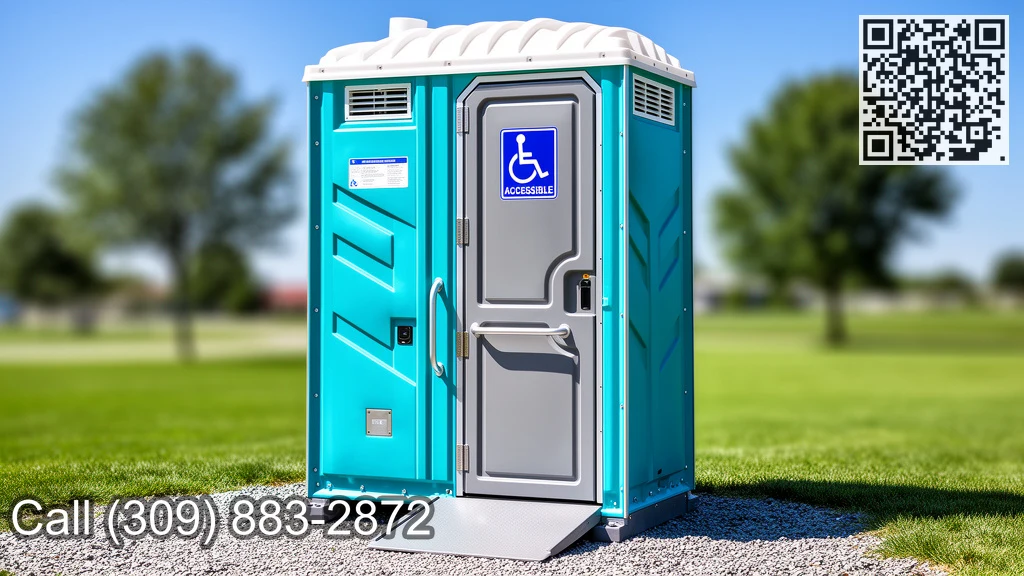
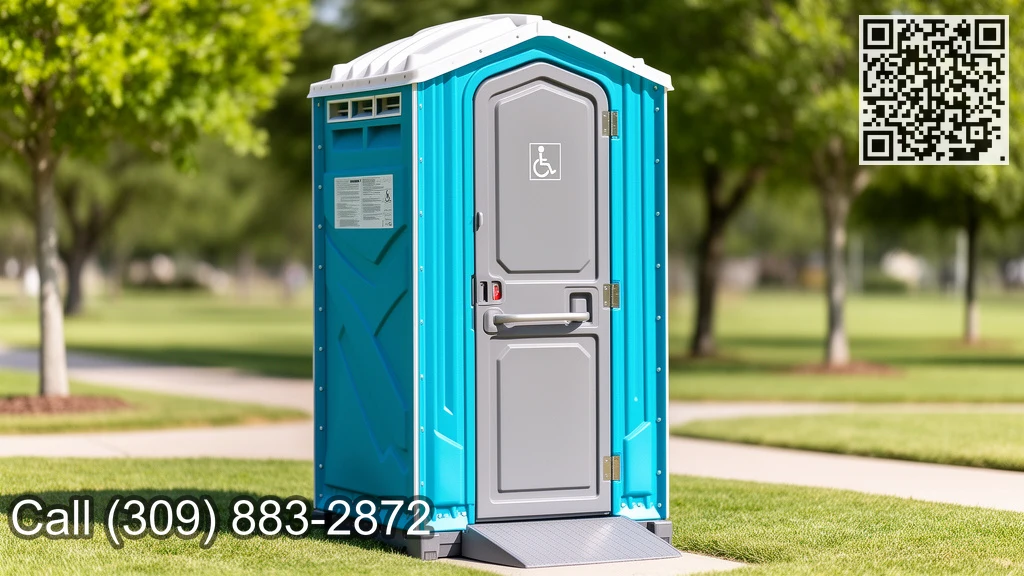
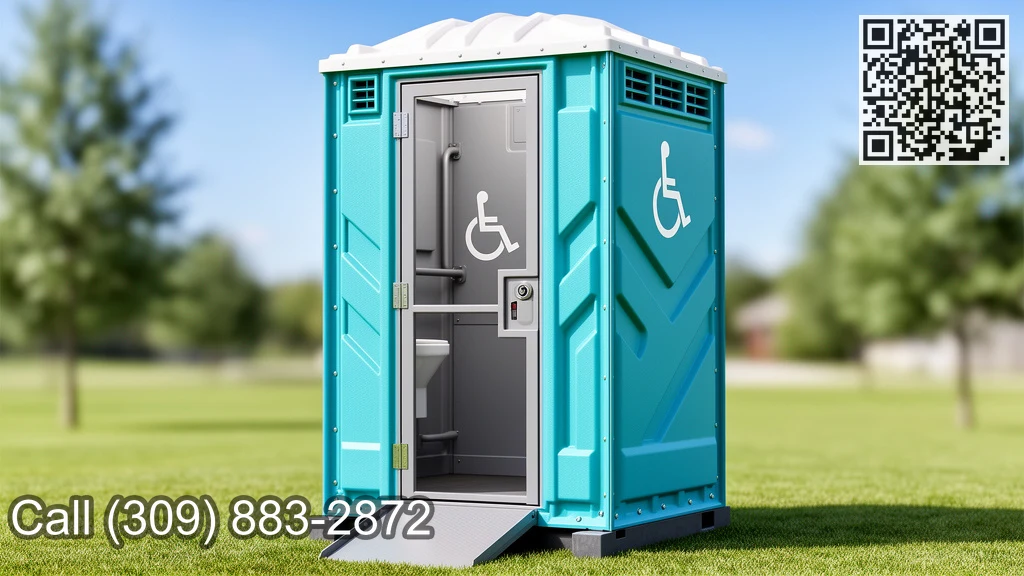
What in fact matters is whether the ada certified portable toilet or ada mobile restroom satisfies the applicable technological requirements. The federal standards require easily accessible portable toilet units to fulfill toilet-room technical requirements, consisting of clearances, transforming area, and door handling clearances, together with applicable policies for grab bars and water-closet clearances. The system needs to also have an obtainable entryway and be gotten to by an available route. If ramps or landings are required, those attributes should abide by ADA technological needs as well.
That means availability is about the whole customer experience from strategy to exit. A device can be marketed as an ada certified available mobile restroom, but if it is gone down on a spot of ground that a mobility device user can not sensibly reach, the setup still has an issue. The very same holds true if the entry location is blocked, unsteady, or arranged in such a way that beats the required maneuvering space.
This is where skilled planners learn to quit believing in terms of tools only. The rented device matters, naturally, however so does the site plan around it.
The path to the device matters as long as the system itself
An easily accessible route is not an afterthought. It is among the core demands, and on short-term websites it is often the hardest part to obtain right.
Portable washrooms are regularly positioned where trucks can discharge rapidly, where they are out of the aesthetic center of an event, or where service accessibility is simplest. Those useful worries are genuine. Anyone who has handled bathroom servicing recognizes the value of tidy truck gain access to and effective placement. However a place that helps maintenance is not instantly obtainable for users.
A certified ada portable toilet rental configuration needs to take into consideration whether a person utilizing a mobility device or other wheelchair tool can really get to the system and enter it. If the path goes across irregular ground, soft soil, a steep change in grade, or momentary barriers, that can threaten the arrangement. If a ramp or landing becomes part of the setup, it also has to abide by the ADA technological rules.
That seems straightforward up until weather gets included. I have actually seen flawlessly sensible site designs become unusable after a day of rain. Crushed rock changes. Lawn softens. Short-term floor covering panels distort at their joints. None of that transforms the accessibility responsibility. It just suggests the organizer ought to have anticipated website conditions https://stephenguwi370.northstarcolumn.com/posts/ada-obtainable-portable-bathroom-criteria-for-rental-decision-makers earlier and inspected them once more prior to opening.
This is one factor last-minute bathroom relocations have a tendency to create problem. Moving the units to address one trouble commonly produces one more. A far better method is to walk the route from the individual's perspective prior to the final placement is approved.
Identification is not a minor detail
Accessible portable bathroom units should be identified with the International Sign of Accessibility. That need is simple to please, however it is surprisingly very easy to disregard when orders are customized in a rush or when units are swapped near to the distribution date.
The recognition issues for a practical reason. Individuals require to be able to find the easily accessible unit without guessing, without asking team, and without examining every door in a row of mobile toilets. On a congested site, clear recognition conserves time and lowers irritation. It also indicates that ease of access was taken into consideration purposefully, not improvised.
I have actually seen easily accessible devices put behind fence runs, put also much from the remainder of the cluster, or kipped down a way that hides the recognizing symbol from the main web traffic path. Also when the right system is practically existing, inadequate placement can make it functionally hard to situate. A coordinator who checks just the documentation misses out on that reality.
Construction sites have a narrow exemption, and it needs to not be overread
There is a crucial subtlety in the standards that deserves care. The ADA standards differentiate portable toilet systems at building and construction sites that are utilized exclusively by building workers. Those systems are excluded from the portable-toilet access scoping demand referenced in the 1991 standard.
That is a slim point, and planners must beware with it. It does not remove accessibility demands for general mobile commode leasings, and it ought to not be stretched to cover scenarios it was not implied to cover. If the leasing is for more comprehensive public use or for settings outside that exclusive construction-personnel context, the accessible-unit demand remains relevant.
This is a place where I often see complication because individuals hear "building and construction site" and stop listening to the remainder of the sentence. The exclusive-use facet issues. So does the distinction between a crew-only setup and a website that serves site visitors, clients, assessors, or the general public. If an use case falls outside the slim exemption, treating it as excluded can produce unneeded legal and operational risk.
Why short-term events are specifically vulnerable to mistakes
Permanent structures typically have layers of evaluation. Illustrations get checked. Facilities teams ask questions. Access concerns are more probable to surface area before opening up. Momentary portable restroom setups seldom obtain that level of scrutiny, although the legal criteria still apply.
Event planning in particular tends to compress decisions into a brief timeline. An enroller desires an impact adjustment. Food vendors need even more space. Parking shifts after license review. Protection demands obstacles. Someplace because churn, the toilet bank obtains pushed to an edge that looked fine on a map and verifies awkward on the ground.
That is why so many ada compliant portable restrooms problems are not dramatic failures. They are buildups of tiny oversights. The easily accessible device exists, yet the path is bad. The matter was right on the first version of the order, but not after development. The system fulfills the needed technological concept, but signs is not visible. Each trouble looks small in seclusion. With each other, they leave customers with an irritating or pointless setup.
An understanding coordinator learns to evaluate the plan with real individuals in mind, not simply with a site diagram.
What a careful testimonial need to cover before delivery
There is no requirement to turn restroom ordering into a legal workshop. Yet there does require to be a disciplined evaluation before the trucks roll.
A useful pre-delivery check need to validate the following:
- The variety of obtainable devices in each cluster satisfies the 5 percent minimum for mobile single-user toilets.
- The chosen ada compliant portable toilets are in fact planned to please ADA access requirements, not just called larger units.
- The path per available system comes, and the entry problem sustains use.
- Any ramp or touchdown needed for accessibility is being taken care of in such a way that abide by ADA technological requirements.
- The available device will be related to the International Symbol of Availability and positioned where customers can easily find it.
That brief review captures a lot of the avoidable blunders I see in temporary washroom preparation. It also assists different devices concerns from website problems. Suppliers can give an ada-compliant portable toilet, yet the planner still regulates where and how that unit is installed.
Vendor discussions that deserve having early
Many rental problems start with obscure language. Someone requests for a handicap unit. Somebody else jots down "ADA restroom." The order obtains processed, however the assumptions continue to be unclear. Then the website team finds far too late that they never ever confirmed the route, the recognition, or how many obtainable devices were needed in the cluster.
A far better vendor discussion is straight. Ask specifically for an ada compliant portable toilet or ada-compliant portable restrooms appropriate for the intended usage, and after that talk with the website problems. The point is not to worry the supplier with every responsibility. It is to make certain every person is resolving the exact same problem.
In practice, the greatest rental connections are the ones where the consumer shares enough context. Is this a public event? A short-lived procedures site? A collection near food service? A spread-out site with numerous bathroom banks? Those information shape just how ease of access need to be planned.
What you want to prevent is the all-too-common circumstance where the obtainable system arrives, technically exists on the invoice, and still can not offer individuals well due to the fact that nobody talked about the placement realities.
The expression "just obtain one ADA device" can lead you astray
That phrase sounds effective, yet it can hide numerous various mistakes.
First, one ada handicap easily accessible mobile restroom may not suffice if the collection size has expanded. Second, "one ADA device" says nothing concerning whether it will certainly be obtainable by an easily accessible course. Third, it does not deal with whether the system is correctly determined. Finally, if there are multiple bathroom collections on a site, concentrating on one available device in one area can ignore the useful experience of users who might be no place near it when they need it.
This is a judgment concern greater than a mathematical one. The criteria provide the framework, yet genuine preparation still calls for thoughtful placement. A site can meet the minimum matter need and still be annoying if the easily accessible device is separated or challenging to reach from major task zones.
That does not indicate you develop added guidelines. It indicates you utilize common sense within the well established requirements. Ease of access should be incorporated into the user flow of the site, not handled like an afterthought tucked behind an outdoor tents line.
Broader enforcement trends are a suggestion, not a distraction
Accessibility compliance is being enforced in a broader atmosphere throughout industries. Recent government assistance activity around digital ease of access for state and local government entities is a great pointer that ADA compliance is not dormant or symbolic. Different contexts have various target dates and technological concerns, but the bigger message coincides: ease of access commitments stay energetic and visible.
For rental organizers, the lesson is not that portable toilet rules transformed as a result of internet availability assistance. They did not. The lesson is that availability should have continual interest across operations, not occasional attention when a grievance shows up. Groups that understand this tend to plan much better in every momentary setup, due to the fact that they stop dealing with ADA problems as niche concerns.
I have observed a practical difference in between companies that assume this way and those that do not. The first team asks accessibility concerns throughout preparing meetings. The second team inquires at delivery. By that factor, options are narrower and expenses normally rise.
Common trouble areas on real sites
Most access failings in mobile washroom preparation are not rooted in poor intent. They come from average project rubbing, especially when a number of vendors and field teams are relocating quickly.
The trouble areas I watch most carefully are these:
- A cluster matter modifications, but nobody recalculates the accessible-unit requirement.
- The easily accessible device is positioned on a route that looks passable on paper however not in real site conditions.
- An unit is classified delicately as ADA-capable without verifying that it is meant to please relevant access requirements.
- The identifying accessibility icon is missing out on, obstructed, or hard to see from the major approach.
- The team concentrates on shipment and maintenance benefit while neglecting the real customer approach and entry experience.
None of these issues are unique. They prevail, preventable, and pricey to repair late.
A coordinator's attitude matters more than an excellent script
Every short-lived website is a bit various. An area fair has various constraints than a roadway race. A public works organizing location differs from an outdoor wedding event place. That is why rigid manuscripts commonly fail. Still, the ADA fundamentals for mobile toilets stay secure sufficient that every coordinator should keep them close at hand.
Think in clusters, not just individual units. Think in routes, not simply stock. Think in individual experience, not just compliance wording. And when there is any type of uncertainty regarding setup problems, resolve it prior to the units are placed.
This kind of care tends to turn up in tiny choices. You evaluate the revised commode matter after participation estimates transform. You stroll the course after rain. You inspect that the sign shows up from where individuals are in fact coming from. You see whether a proposed location is technically available however virtually awkward. That is what experienced preparation resembles on the ground.
An appropriately picked ada portable restroom or ada-compliant portable toilet is not a politeness. It is a requirement in the contexts where the requirements use, and it is part of making a short-lived website functional for everybody that requires it.
Rental organizers that assess these information very early typically discover that accessibility is not the hardest component of the job. It is the component that rewards foresight. When it is managed well, people may hardly discover. They just use the website as they need to have the ability to. And that peaceful normalcy is commonly the clearest indicator that the planning was done right.
 Ask ChatGPT
 Ask Grok
 Ask Perplexity
 Ask Claude
 Ask Google AI
 Ask You